One Incomplete Sentence, Countless Questions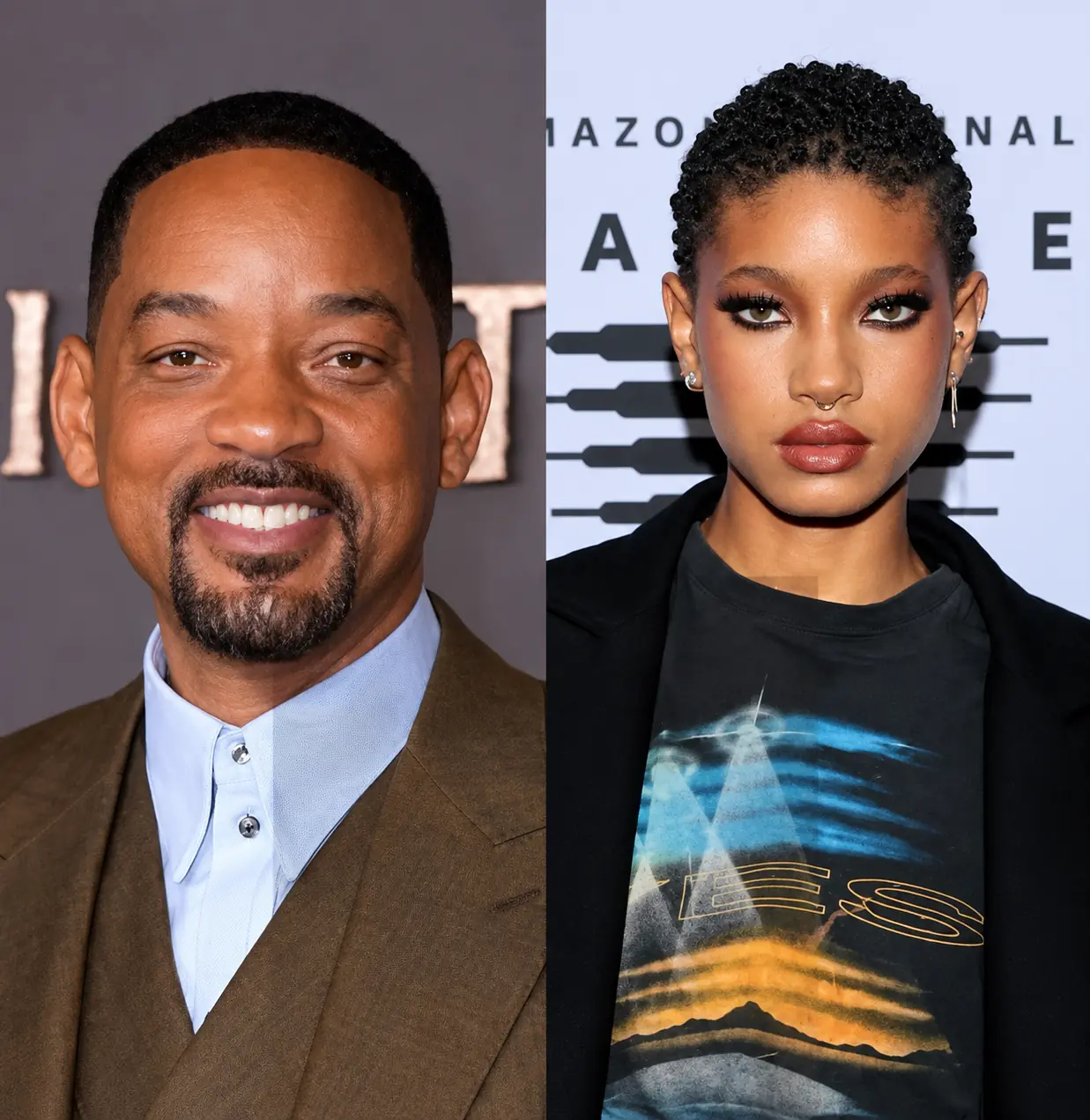
Will Smith’s Daughter Has “Broken Her Silence”: What the Viral Headline Really Reveals
An unfinished quote about a famous father can spark intense curiosity, but the story behind a headline matters more than the suspense it creates.
Celebrity headlines often spread quickly when they suggest that a famous family is about to reveal something personal. A headline claiming that Will Smith’s daughter has “broken her silence,” followed by the incomplete phrase “My dad used to b…,” is a clear example of how a few carefully chosen words can encourage readers to click in search of answers.
The wording implies that a personal revelation is coming, yet it leaves the most important information unfinished. What did she allegedly say? Which daughter is the headline referring to? Was the statement taken from an interview, a social media post, or another source? And does the available material support the suggestion that a significant revelation has actually occurred?
The supplied screenshot does not provide enough verified information to answer those questions. It shows the headline and fragments of an article discussing why this type of wording attracts attention, but it does not establish the full quotation or confirm a new statement from Will Smith’s daughter.
Rather than treating the unfinished quote as proof of a family controversy, it is more accurate to examine how viral celebrity headlines work, why audiences respond to them, and what readers should look for before accepting a claim as fact.
Why an Unfinished Quote Can Capture So Much Attention

One of the oldest techniques in online publishing is to leave a sentence unfinished. A headline that says someone made a surprising statement but withholds the actual words creates an information gap. Readers naturally want to fill that gap, especially when the subject is a familiar public figure.
The phrase “My dad used to b…” is particularly effective at creating curiosity because it offers the beginning of a personal statement without revealing its meaning. The missing words could lead to a harmless childhood memory, a discussion of parenting, an expression of gratitude, or a more serious reflection. Without the full quotation, readers cannot know which interpretation is correct.
The headline also combines three elements that frequently attract attention: a well-known celebrity, a family relationship, and the suggestion of a previously undisclosed statement. Together, these elements invite audiences to imagine a story before they have seen the evidence.
This technique is not automatically dishonest. Editors sometimes shorten quotations because of limited space, and headlines cannot always include every detail. The problem arises when the missing information is essential to understanding the story or when the wording implies a dramatic revelation that the article does not substantiate.
A responsible reader should therefore treat the headline as an invitation to investigate, not as confirmation that a major disclosure has taken place.
Will Smith’s Family and the Public’s Curiosity
Will Smith has spent decades in the public eye as an actor, musician, and entertainer. His family has also attracted attention, partly because some members have pursued creative careers of their own.
Jada Pinkett Smith and the couple’s children have occasionally discussed family experiences in public interviews and other media appearances. Those conversations have generated interest because they offer audiences a glimpse into the challenges of growing up in a well-known family.
However, public interest should not be mistaken for confirmation of a new revelation. The screenshot’s headline does not clearly identify which daughter is being discussed, provide the complete quotation, or establish where the alleged statement was made.
Without that context, readers cannot reliably determine whether the headline refers to a recent interview, an older comment, a quotation taken out of context, or simply a teaser designed to encourage clicks.
This distinction is important when reporting on family relationships. A comment about a parent might concern an ordinary childhood experience, a difference in perspective, a personal lesson, or a complicated family memory. An unfinished sentence gives readers no reliable basis for deciding which meaning applies.
A responsible article should not invent dialogue, attribute unverified accusations to a family member, or imply that a private dispute exists without evidence.
The most useful next step would be to locate the original interview or public statement, if one exists, and read the full passage in context. That would allow readers to understand what was actually said rather than relying on the expectations created by a headline.
The Psychology Behind Celebrity Clickbait
The headline uses a technique commonly known as a curiosity gap. It provides enough information to establish a subject but withholds the detail that readers most want to know.
In this case, the subject is a famous entertainer’s daughter, and the missing detail is the rest of her alleged statement about her father.
Several psychological tendencies can make this format effective.
First, people naturally seek completion. An unfinished quotation encourages the mind to imagine possible endings. Readers may click because they want to resolve the uncertainty.
Second, family relationships carry emotional significance. Stories about parents and children can feel relatable, even when the people involved are celebrities. Audiences may wonder whether the statement concerns love, disappointment, upbringing, or a difficult memory.
Third, familiarity creates interest. People who recognize Will Smith may be more likely to investigate a headline involving his family than an unfamiliar name.
These mechanisms are not inherently harmful. A well-written headline can create curiosity while accurately representing the article. The problem occurs when suspense replaces meaningful information or exaggerates what the evidence supports.
A headline may promise a dramatic disclosure even when the underlying article contains little new information. In such cases, readers may click expecting a major revelation and discover that the story merely discusses speculation about what someone might have said.
Over time, this style of publishing can weaken trust. Readers who repeatedly encounter exaggerated claims may become less confident in online entertainment reporting, including stories that are genuinely important.
How Readers Can Separate Entertainment News From Speculation

When a headline suggests that a celebrity has revealed something personal, a few simple checks can help establish whether the story is reliable.
- Find the original source. Look for the interview, recording, verified social media post, or public statement where the words were supposedly spoken.
- Read the complete quotation. A short excerpt may omit context that changes its meaning.
- Check the publication date. An old interview may be presented as though it contains a new revelation.
- Look for independent reporting. Multiple websites repeating the same unsourced claim do not necessarily provide independent confirmation.
- Notice what the article actually establishes. If the headline promises a revelation but the text provides no direct quotation or identifiable source, remain cautious.
- Avoid spreading unverified allegations. Sharing a rumor can give it credibility even when the original evidence is weak.
These habits are particularly important when a headline involves sensitive family matters. A misleading interpretation can affect reputations and encourage unnecessary arguments among fans.
Readers should also recognize that celebrities are not required to disclose every private conversation or family experience. Even when a public figure discusses a personal subject, that does not justify assuming that every related rumor is true.
Why the Full Context Matters More Than the Teaser
A complete interview allows audiences to understand not only the words someone used but also the question being answered, the surrounding conversation, and the intended meaning.
For example, a statement beginning with “My dad used to…” could introduce a story about a childhood routine, a piece of advice, a shared hobby, or a memory that shaped someone’s outlook. Without the rest of the sentence, the possible meanings are too broad to draw a meaningful conclusion.
This is why an incomplete quotation should not be used to suggest a particular accusation or emotional conflict. The missing words may be the most important part of the statement.
Context also matters when comparing older comments with newer events. People’s perspectives can evolve, and a statement made years ago may not reflect how someone feels today. Responsible reporting should make those distinctions clear rather than combining separate moments into a misleading narrative.
In the case of the supplied screenshot, the available information supports a discussion about headline construction and verification. It does not establish the exact statement attributed to Will Smith’s daughter or confirm that a new disclosure has occurred.
Until the original source can be identified, readers should avoid treating the teaser as a factual account of a family revelation.
What the Viral Headline Really Teaches Us
The headline about Will Smith’s daughter demonstrates how a few words can produce widespread curiosity without supplying much information. The famous name attracts attention, the family relationship creates emotional interest, and the unfinished quotation encourages readers to search for an ending.
But curiosity and confirmation are not the same thing.
The available material does not establish the full quotation, identify its original source, or confirm that it represents a recent revelation. Any stronger claim would go beyond the evidence provided.
For readers, the best response is to seek the original statement and evaluate it in context. For publishers, the lesson is that a compelling headline should still accurately represent what the article can substantiate.
Celebrity stories can be entertaining and meaningful, especially when they offer genuine insight into a person’s experiences. They are most useful, however, when audiences can distinguish documented statements from speculation.
Until more reliable information is available, the unfinished phrase should remain just that: an incomplete quotation, not proof of a family controversy.